Sunday, 16 March 2014

Assignment #3: Contact Sheet and Print Reflection

Contact Sheet Test


Final Print Test #1

Final Print Test #2

Final Contact Sheet

Final Contact Sheet

Final Photo

After learning about the SLR cameras in class, I was nervous to start this third assignment. I’m used to just clicking, shooting, and getting instant results. Taking photos with an analog camera makes everything a mystery, and the whole time I was photographing, I was apprehensive and I felt unsure. When shooting my test role, I had trouble wrapping my mind around the aperture settings and shutter speeds. I felt like every picture was forced and unnatural, and I had to think about what I was doing for too long. When I took my final rolls of film, I found that I was a lot more engaged with the whole process, and really got into the picture-taking experience.

I decided to use the theme of memory for this project. I knew right away that I wanted to take my photos at the park near my house. I grew up playing there, sledding with family and friends in the winter, feeding the ducks, and walking the paths in the summer. It’s a beautiful green setting right in the middle of suburbia, and shared by all of the local residents. I chose a crisp sunny day to shoot my photos, and decided to walk around the park in search of my inspiration. I ended up stumbling on a large group of ducks along the paths, and used an entire role of film on them. I found myself lying in the snow in order to get down to their level, and I didn’t care that I was cold and wet. After that encounter, I went to the sledding area of the park, and found a lot of children and families playing on the mountains. I took that opportunity to capture three young girls sitting on top of a snow pile. They reminded me of myself when I was younger, climbing in the snow, and spending my Sundays in good company. Again, shooting the pictures came very easily, and I stopped worrying about my camera settings. I knew to keep my aperture small, and took my photos with a fast shutter speed to account for all of the bright light outside.

Developing my filmstrips went very smoothly, and with the help of a classmate, we managed to finish the whole process within an hour. I remember being really excited when I was able to peek at my film after fixing it, and saw that all of my time and hard work had paid off. I ran into a few problems when working in the darkroom, but the photography students around me were very helpful, and made good suggestions to push my photos further.

The chapter written by Bell Hooks on the ARTE 352 Moodle website deals with the theme of photography and specifically how it impacted the black population. She also touched on the subject of identity and memory when discussing the old photograph of her father that was hung in her sister’s home.

“The word remember evokes the coming together of severed parts, fragments becoming a whole. Photography has been, and is, central to that aspect of decolonization that calls us back to the past… Using images, we connect ourselves to a memory that enables us to construct radical identities, images of ourselves that transcend the limits of the eye.” (Hooks, 1995, p. 64)

This quote at the end of the chapter describes what I see when I look at the photos I took in the park. Even though I captured people that I don’t know, the three young girls represent the memories that I have from my childhood. When I look at those photos, I’ll remember the amazing days I spent sledding and playing in the snow with family and friends, and how those experiences have impacted my life today. 


Work Cited:

Hooks, B. (1995). Art on My Mind. In Our Glory: Photography and Black Life. p. 54-64

Week #6: Write-up

Mitch Dobrowner
Chromosphere 
Green Grass, 
South Dakota, 2012

Mitch Dobrowner

Veil, 
Buffalo 
South Dakota, 2012
Mitch Dobrowner

Stone Butterfly, 
Paria Plateau 
Arizona, 2008

Ansel Adams

Clouds, Kings River Canyon, California, 1936

This week I worked many hours in the Concordia darkroom, trying to develop the “perfect” black and white photo for my third ARTE 352 assignment. With that as my inspiration, I decided to focus on a black and white photographer for this write-up. I searched for interesting artists who work solely with 35mm film and develop and expose their own photos. I had trouble finding an artist that I could connect with, so I decided to choose a general black and white photographer in the end. I stumbled on Mitch Dobrowner, an American artist who lives and works in California. He focuses on landscape photography, and his series on storms really caught my attention.
After doing more research on the artist, I discovered that he chases storms all around America in order to capture the beauty of nature (even when it’s being destructive). His main inspiration is the work of Ansel Adams, who also used nature as a main theme in his photography. Adams shot a lot of national parks, and landmarks such as Yosemite National Park in California and The Grand Canyon, which traverses several U.S. states. I compared both photographers’ images, and found many similarities in layout and compositional choices.
If I were to teach documentary photography to a future class, I think that both of these artists would be a great inspiration to the students. I would compare both photographers, and discuss the differences between Adams’ work from the 20’s and 30’s to Dobrowner’s more current photographic practice. As stated in Gina Wenger’s article, it’s important to show today’s students inspirational artwork from the past. This may help them to broaden their opinions and views on the subject.
“The use of contemporary images is a vital and significant curricular need; however, the relevance of historical artworks can offer avenues for analyzing equally provoking issues. By approaching historical artworks that relate to contemporary topics, students may learn more about themselves, their world, and history.” (Wenger, 2007)


Work Cited

Dobrowner, M. (2014) Mitch Dobrowner, Fine Art Photography. Retrieved from http://www.mitchdobrowner.com/pages/4/
Wenger, G. (2007). Documentary Photography: Three Photographers’ Standpoints on the Japanese-American Internment. Art Educ 60 no5.

Wikimedia Commons, (2013). Kings Canyon-Clouds - White Pass Aah16.jpg. Retrieved from http://commons.wikimedia.org/wiki/File:Kings_Canyon-Clouds_-_White_Pass_Aah16.jpg


Tuesday, 11 March 2014

Week #5: Write-up


Alberto Seveso
Beibeees
Retrieved from: http://burdu976.com/?portfolio=beibeees


Alberto Seveso
Il Mattono Ha L'oro in Bocca

Retrieved From: http://burdu976.com/?portfolio=il-mattino-ha-loro-in-bocca 

Alberto Seveso
The Black Trap in Munich
Retrieved from: http://burdu976.com/?portfolio=the-black-trap-in-munich


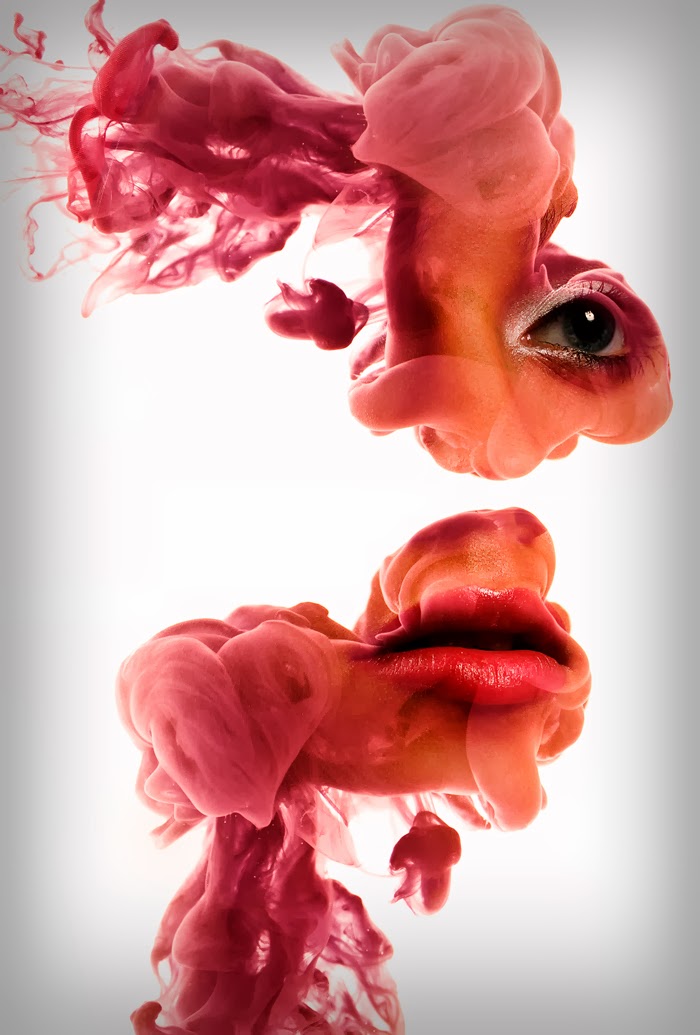
While doing some Photoshop research for another school project, I stumbled on Alberto Seveso, an amazing photographer and graphic artist who designed the box cover for the Photoshop CS6 extended version. I immediately searched him up in Google, and was blown away by his unique collage style, and beautiful photos. Through my research, I discovered that he takes his own photos of models, and then reworks the images in Photoshop to create his “sperm cutouts” (a term to describe the shapes he uses). He has worked on CD covers for many artists, magazine covers, and product ads, as well as his own photography.

My favourite photos that he’s taken would be his ink series. I’ve tried to capture interesting pictures of ink flowing through water in the past, but my attempts are nothing compared to what Seveso creates. His amazing images have so many vibrant colours and a lot of movement. Another series he created called Beibeees incorporates his ink photography with his portrait pieces. He is obviously a master of Photoshop, and his final images make me realize the importance of the high quality, and beautiful photographs he uses to start his projects. I’m sure it would be difficult to create such incredible final pieces with mediocre originals.

The article Digital Photography and the Question of realism by Antonia Bardis discusses the emergence of digital photography, and questions if this new kind of photography is affecting our outlook on photography in general. The following quote stood out to me because I believe that it explains Seveso’s approach to photography and art making.

Digital photography is a medium that privileges fragmentation. As a result, the photographer now has gained complete control over the image and has acquired the freedom of a painter to depict whatever he or she can imagine. Consequently, just like paintings, digital photographs have come to be seen as constructions. (Bardis, 2004)

Seveso builds up layers of photos that he’s cut and manipulated in order to create his images. Some of the final pieces have a very painterly look and allow the eye to move around the page with ease. Others have a choppier effect, and seem cut up and re-arranged. I think that the use of the word “construction” in Bardis’ text is extremely appropriate in describing Seveso’s style. 

Alberto Seveso Website: http://burdu976.com


Work Cited:

Bardis, A. (2004). Digital Photography and the Question of Realism. Journal of Visual Art Practice 3: 3, pp. 209–218
Seveso, A. (2014). Alberto Seveso. Retrieved from http://burdu976.com

Saturday, 1 March 2014

Assignment #2: Pinhole Camera Photos and reflection

First Attempts


Final Negative #1

Final Negative #2

Final Positive #1

Final Positive #2


When we first started learning about pinhole photography, I was excited to make my own camera and get shooting outdoors. We watched the video about Ann Hamilton, and saw how she created really interesting photos using her mouth as a camera. She was able to produce some great images and portraits, and made the process look extremely easy. I later found out that it’s not simple at all.

I worked in a group of five, and we were able to come up with the concept of memory and identity for our project quite quickly. We created four pinhole cameras in order to test the results we could achieve with differently-shaped boxes. We used two square boxes (one large and one small), and two circular boxes (one pinhole was placed on the top of the box, and the other was placed on the side of the box). Four of our group members had the same break between classes, so we set out to take some photos. We spent three weeks trying to create our images, and a lot of time running in and out of the EV building to capture our “selfies”, then develop our photos, then reload more paper into our cameras when our results produced nothing. The process was extremely frustrating, and every time we saw little or nothing develop, we grew more and more discouraged. As time went on, we realized that the circular boxes were producing better results, so we stopped using the square ones. We paid close attention to the light meter applications we had downloaded on our phones, as well as the time chart we had saved from the ARTE 352 Moodle website. Eventually it became a guessing game based on our past experience, and the amount of sun that was shining. We compared previous “photo shoots” and timing, until we finally captured our first successful portrait. Then we decided to change locations, and took our second portrait. I believe that we used at least twenty sheets of paper, two rolls of hockey tape, and ten hours of time in order to come up with our final images.

Taking the photos in the middle of winter proved to be a great challenge as well. Standing outside in the cold for ten minutes without moving was very difficult, and it was tough to hold the boxes without gloves (we needed to take them off in order to open the shutters). It was interesting to see the peoples’ reactions as they passed by us though. Some made fun of us, while others were curious and asked questions. We must have looked quite silly standing with our arms in the air, holding boxes and not moving.
After we had produced successful negatives, we then created our positives. The process was simple enough, but we had to look online for proper instructions, and ask friends who had already taken the course to explain the process to us. We tried different apertures and timing until we were happy with our final products.

Group work can be extremely challenging at times, but I think that we had a strong team that worked well together. We all listened to each other and took suggestions into consideration. We made good use of our breaks at school, and four of us took the photos and worked in the dark room together. Our fifth member helped out with the initial idea for the project, as well as creating a pinhole diagram and writing portions of the lesson plan. In order to create our plan, I started filling in some sections, and then sent it along to the next group member to work on, etc… until all of the parts were completed. We also divided the questions up among the group and each of us answered some.

This project was extremely time-consuming, and I would say that the process was more frustrating than enjoyable. I think that an actual in-class demo on how to make the pinhole box would have been beneficial to the whole class (I know that there was a demonstration on the Moodle website, but I’m definitely a visual learner, and appreciate a first-hand experience). There was also brief mention of creating a successful positive image, but no instructions on how to properly achieve one. Again, a quick demo would have been helpful to me. With that being said, I think that I definitely learned a lot about exposure timing, and the effect the sun has on the final photos we make. I also learned to trust my instincts, as well as take risks in order to produce the final images. However, I think that I will stick to an actual camera in the future. 

Sunday, 9 February 2014

Week #4: Write-up

Marla Schreiber
Untitled
 
Marla Schreiber
Untitled

This week I’ll be discussing some of my own photography, as well as that of my older sister, Marla. She took a dark room photography course when she was in CEGEP, and did some similar projects that we’re doing in class this semester. I remember her placing me in different rooms of our house in order to capture the best lighting and to create a lot of contrasting shadows. We spent an entire afternoon one Sunday staging the “prefect” shots for her project. One photo that she took is of her fiancé Adam who was then eighteen. I loved that picture so much that I decided to draw it in graphite. To this day, it’s still hanging on the living room wall of his parents’ home. The other photo that stood out from her album was of a man walking his son home from school. I’m really drawn to the composition, and I like that the subjects didn’t even know they were being photographed.

My photography is amateur, but I enjoy taking photographs and capturing memories. I had the opportunity to travel to Australia, New Zealand and Southeast Asia a few years ago, and one of my favourite things to do is to look through all of the photos I took. Each one has a story behind it and reminds me of a specific day in my life. I don’t know if they’re technically “right” or not, but I consider some of my shots to be aesthetically appealing. According to Michael Smith, I like to do "my own thing". He wrote in his article that, "the more we live, the more we understand, even if that understanding sometimes consists in knowing how very little we really know. And of course, the more we understand, the more we can put into our own work— our own photographs." I thought that was a very appropriate statement that truly describes what kind of photographer I am. 


Sandra Schreiber
Petronas Towers, Kuala Lumpur, Malaysia
Sandra Schreiber
Franz Joseph Glasier, Franz Joseph Waiau, New Zealand
Sandra Schreiber
Somewhere on the side of the road, South Island, New Zealand

Work Cited

Smith, M. (2011). On Teaching Photography. Retrieved from http://www.michaelandpaula.com/mp/onteachphoto.html

Week #3: Write-up

Rachel Baran
Delusions
Rachel Baran
Fade


After telling my sister that I was on the lookout for some interesting photographers, she sent me a link to Rachel Baran’s write-up on the French website Buzzly (http://www.buzzly.fr/les-auto-portraits-puissants-et-surrealistes-d-une-jeune-fille-de-20-ans.html). I was immediately interested in her surrealistic works, and I love how she uses Photoshop seamlessly in order to create unnatural effects. She also includes typography and hand written elements to some of her final photos. Rachel is from the United States and lives in Ohio. I was shocked to read that she is only 20 years old and has such an amazing talent. (Then I read some of her writing online, and thought that she sounded like a 13-year old with the amount of “likes” and text message abbreviations she had used). She likes to travel in order to find interesting scenery for her photo-shoots.

Rachel’s style ranges from somber imagery including bloody horror scenes to high fashion editorial shots that I could picture (no pun intended) in Vogue or Zinc magazine. She also takes a lot of self-portraits, and transforms herself in order to create an interesting photograph.

The images that really stood out to me are her “pixilated” photos. I find it ironic that she chose to add a pixilated effect when the majority of photographers try to avoid pixilation at all cost. She chose specific parts of her photos to digitally alter and manipulate. I like the contrast between the crisp parts of the images and the blurry portions. 


Work Cited

Brice. (2014). Les AutoPortraits Puissants et Surréalistes d'une Jeune Fille de 20 Ans. Buzzly. Retrieved from http://www.buzzly.fr/les-auto-portraits-puissants-et-surrealistes-d-une-jeune-fille-de-20-ans.html

Baran, R. (2014). Rachel Baran. Flickr. Retrieved from http://www.flickr.com/photos/beee33/

Week #2: Write-up

Christopher Boffoli
Photo from Big Appetites series
Christopher Boffoli
Photo from Big Appetites series
Christopher Boffoli
Photo from Big Appetites series

I would like to thank Facebook for introducing me to Christopher Boffoli. I was scrolling through my newsfeed a few weeks ago, and stumbled on his Big Appetites series. Christopher is a photographer, filmmaker, writer and journalist from Seattle. He’s travelled most of the world and documented his adventures through photography and film. This well-known series has been published in print and online in over 100 countries.

The television programs of his youth, and some of his personal experiences, inspired Christopher. He was a small person in a large world. He chose to work with food because of the vibrant colours and interesting textures he could achieve simply by using the proper lighting. Food is also a universal subject that can be recognized by all types of people regardless of culture, language and location.

Another inspiration for this series was the project Travelers by Walter Martin & Paloma Muñoz. They created small dioramas inside snow globes. Some were whimsical and beautiful, but Christopher was more attracted to their disturbing works. All three artists work in the same scale and photograph the tiny details.

Christopher works with foods that are in season that he can purchase at local farmers’ markets. He also likes to use iconic American foods and name brands such as Oreo Cookies and Twinkies. He hopes that those foods will spark childhood memories in his viewers. All of the figures are extremely detailed and hand painted by the artists. 

This type of photography is very precise and technical. Michael Smith wrote that, "technique... gives form to expression, it also helps to shape and modify that expression." I believe that Christopher's macro photography shows a lot of expression through the movement that he creates (even though nothing is actually moving), and the vibrant colours he uses.

Walter Martin & Paloma Munoz
Traveler 78 at Night
Walter Martin & Paloma Munoz
Traveler 218


Work Cited

Boffoli, C. (2012). Big Appetites Series. Retrieved from http://bigappetites.net/
Martin. W. & Munoz, P. (2014). Walter Martin and Paloma Munoz. Retrieved from    http://www.martin-munoz.com/main.html
Smith, M. (2011). On Teaching Photography. Retrieved from http://www.michaelandpaula.com/mp/onteachphoto.html